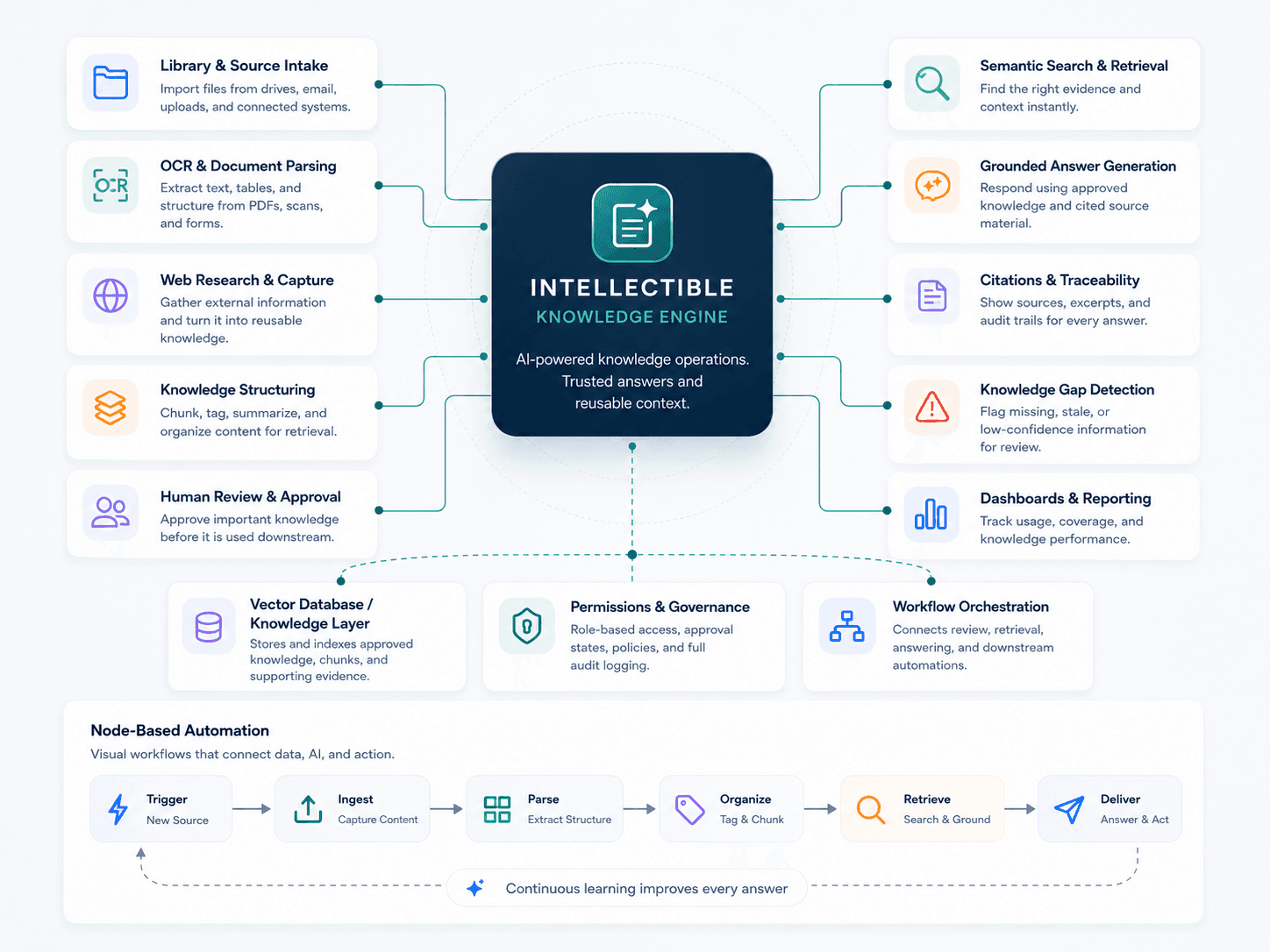
Knowledge & Operations Engine
Start with governed company knowledge. Expand it into the way your team works.
The Knowledge & Operations Engine turns documents, spreadsheets, reports, notes, and system data into approved, permission-aware records that people can search and workflows can use.
Everything your company knows, approved and ready to use.
Most company knowledge lives in scattered files, inboxes, drives, spreadsheets, CRM notes, policies, project reports, technical documents, and tribal memory. The engine gives teams a governed way to turn that material into trusted records that can be searched, reused, routed, and connected to day-to-day operations.
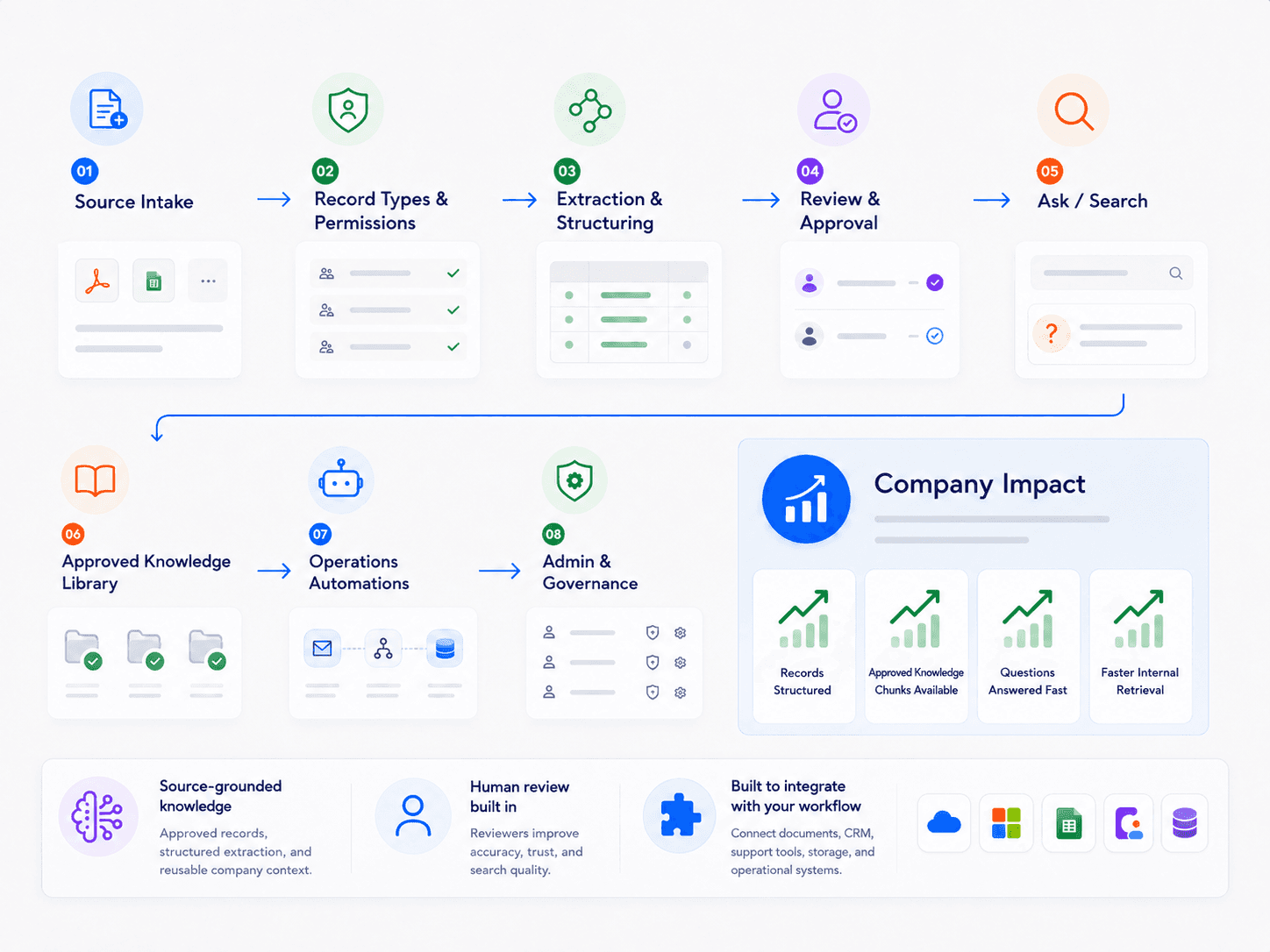
Turn scattered files into structured company knowledge.
Upload source material, select the information type, apply the right permission group, and capture the source context before AI extraction begins.
Support documents, spreadsheets, reports, notes, policies, logs, and structured exports.
Classify each source by business context so it enters the knowledge base with the right metadata.
Keep sensitive material governed from the moment it is added.
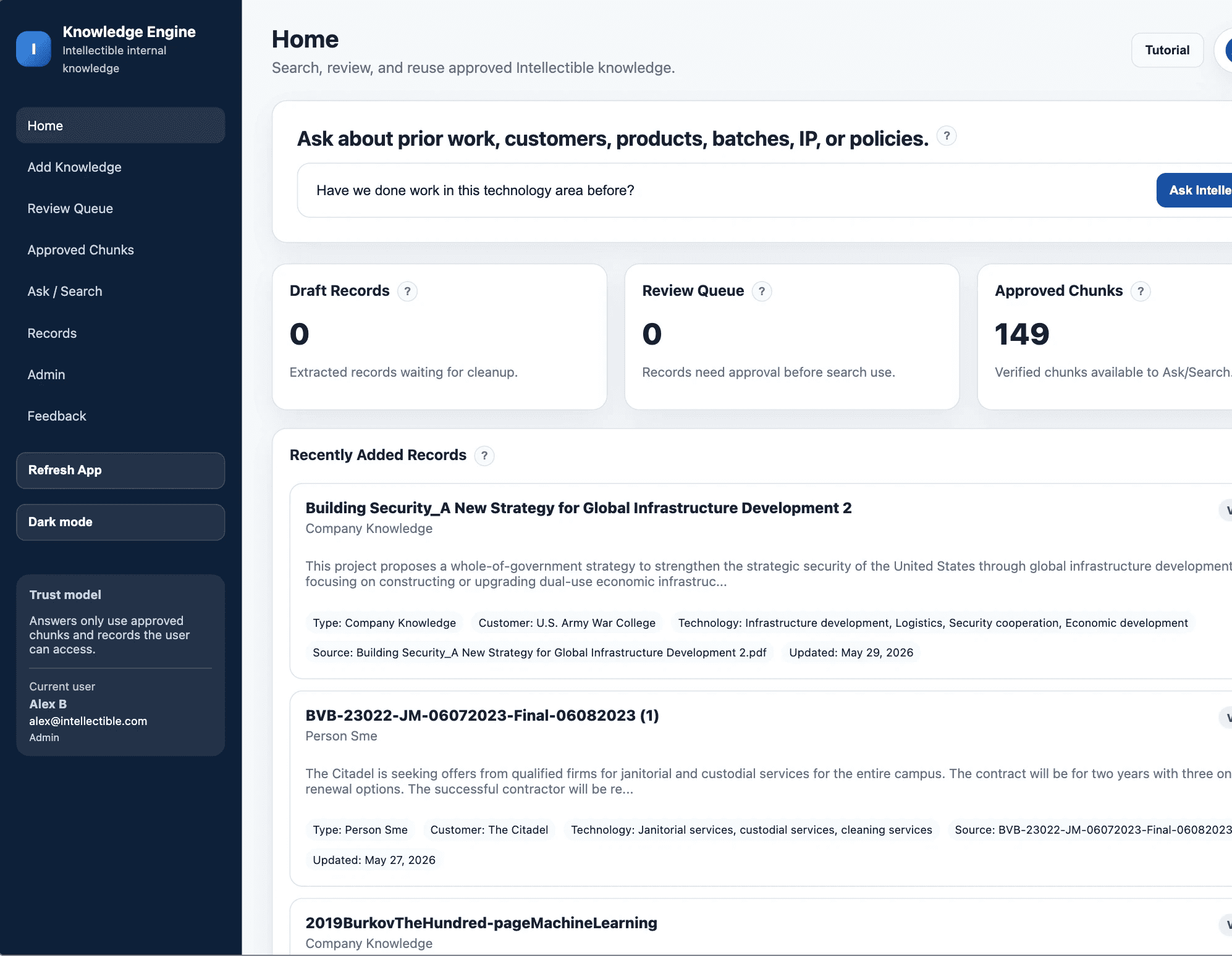
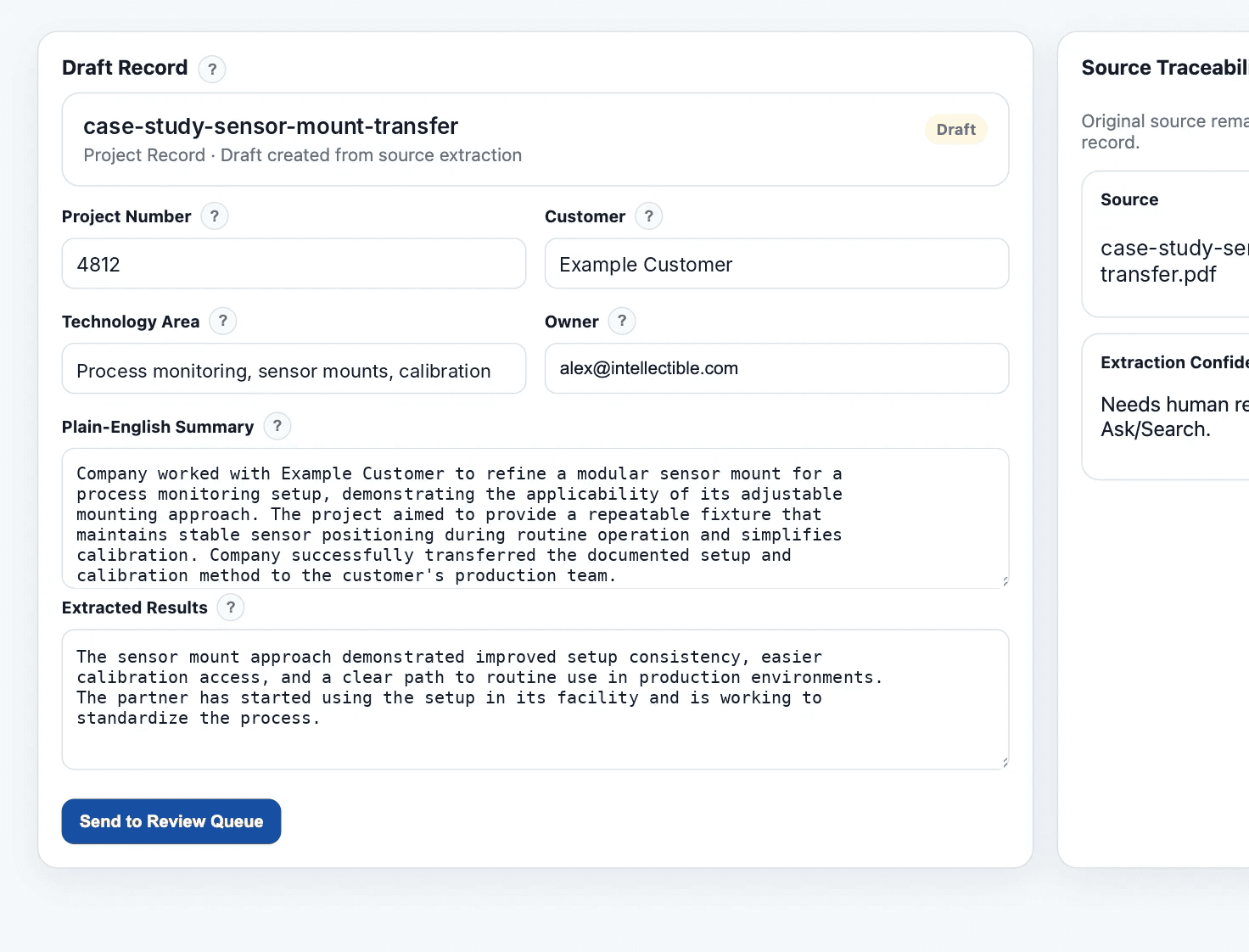
Approve trusted records before they reach search.
The engine creates draft records from source material, then routes them into a review queue where administrators or subject matter experts can validate, approve, reject, or request changes.
Review extracted summaries, tags, source metadata, permission groups, and confidence signals.
Publish only approved knowledge into the searchable record base.
Keep a clear separation between drafts, approved records, and operational knowledge.
Use the same approved knowledge layer to support email drafting, support responses, market briefs, onboarding, and customer operations.
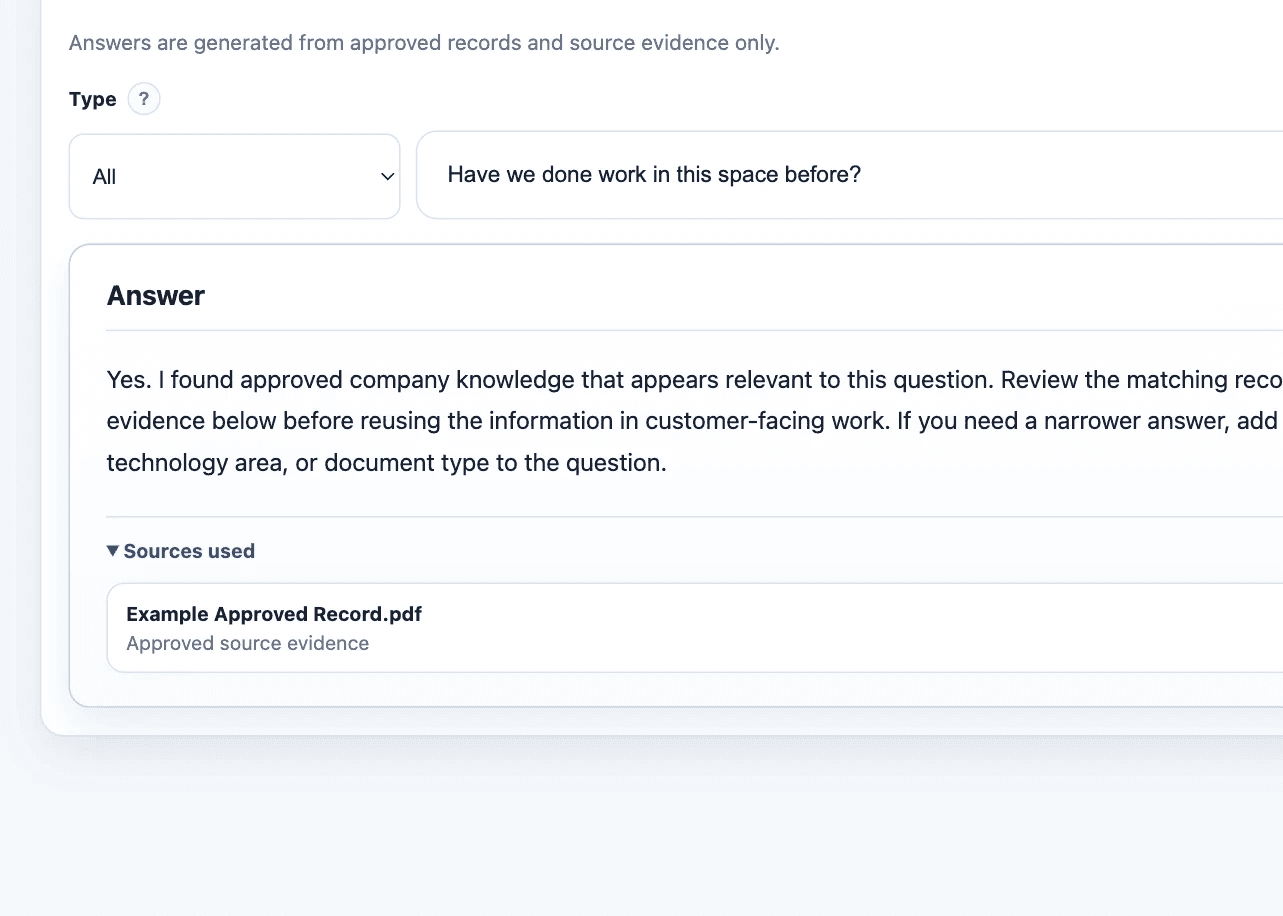
Ask questions across approved knowledge, not chatbot memory.
Employees can ask natural-language questions and receive answers grounded in approved records and source evidence, filtered by what their role is allowed to access.
Search across project history, customer context, technical records, policies, procedures, IP, market intelligence, and more.
Show source-backed answers with supporting records and citations users can inspect.
Protect restricted knowledge with permission-aware retrieval instead of generic enterprise search.
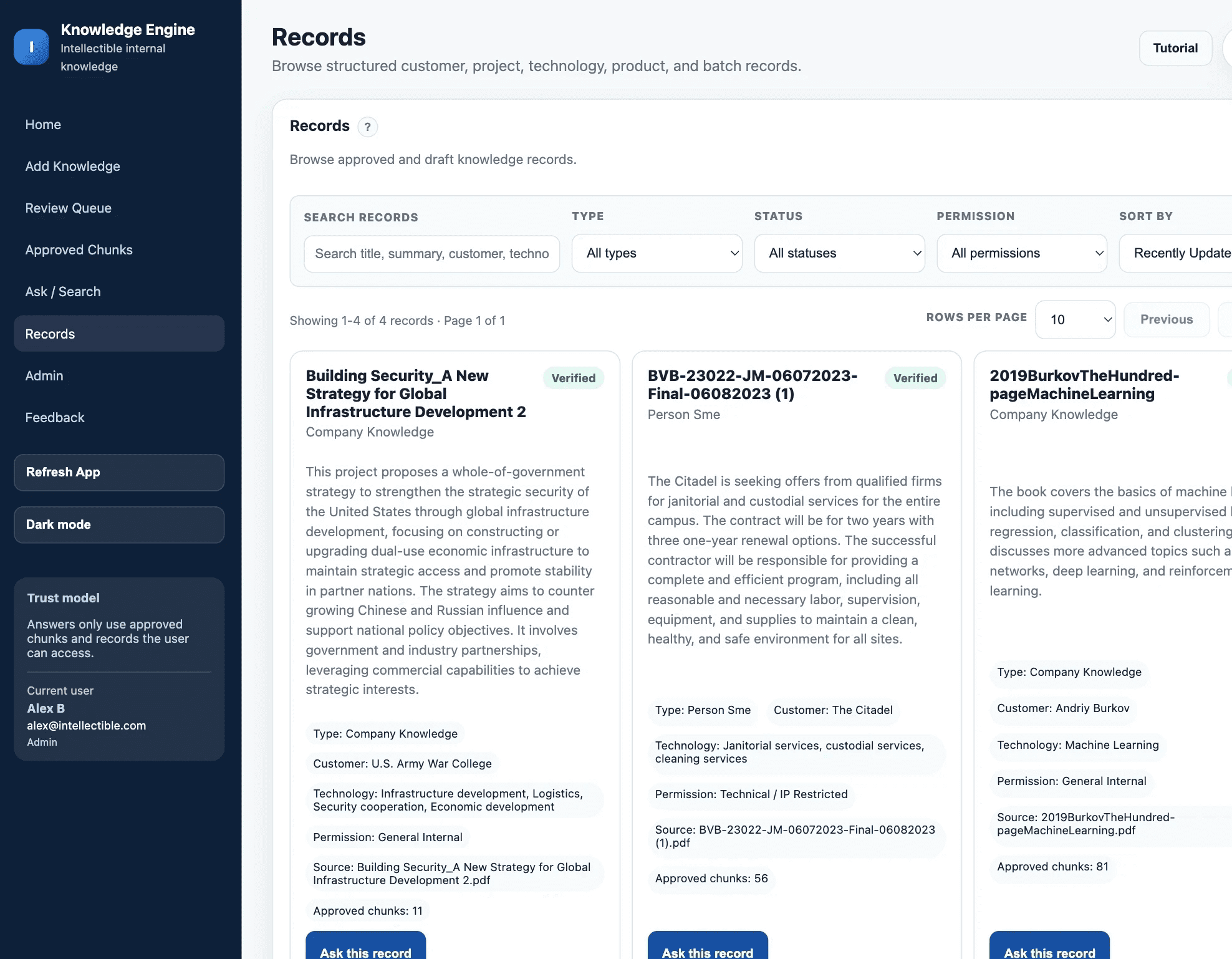
Make knowledge browsable, structured, and reusable.
Approved knowledge is not trapped inside chat. Teams can browse the record library by type, source, customer, project, permission group, approval status, tags, and business metadata.
Create record types for customers, projects, products, policies, work instructions, batches, lab knowledge, reports, and more.
Give teams a structured operating layer for knowledge, not just a folder search box.
Reuse the same records across search, dashboards, briefs, assistants, and automations.
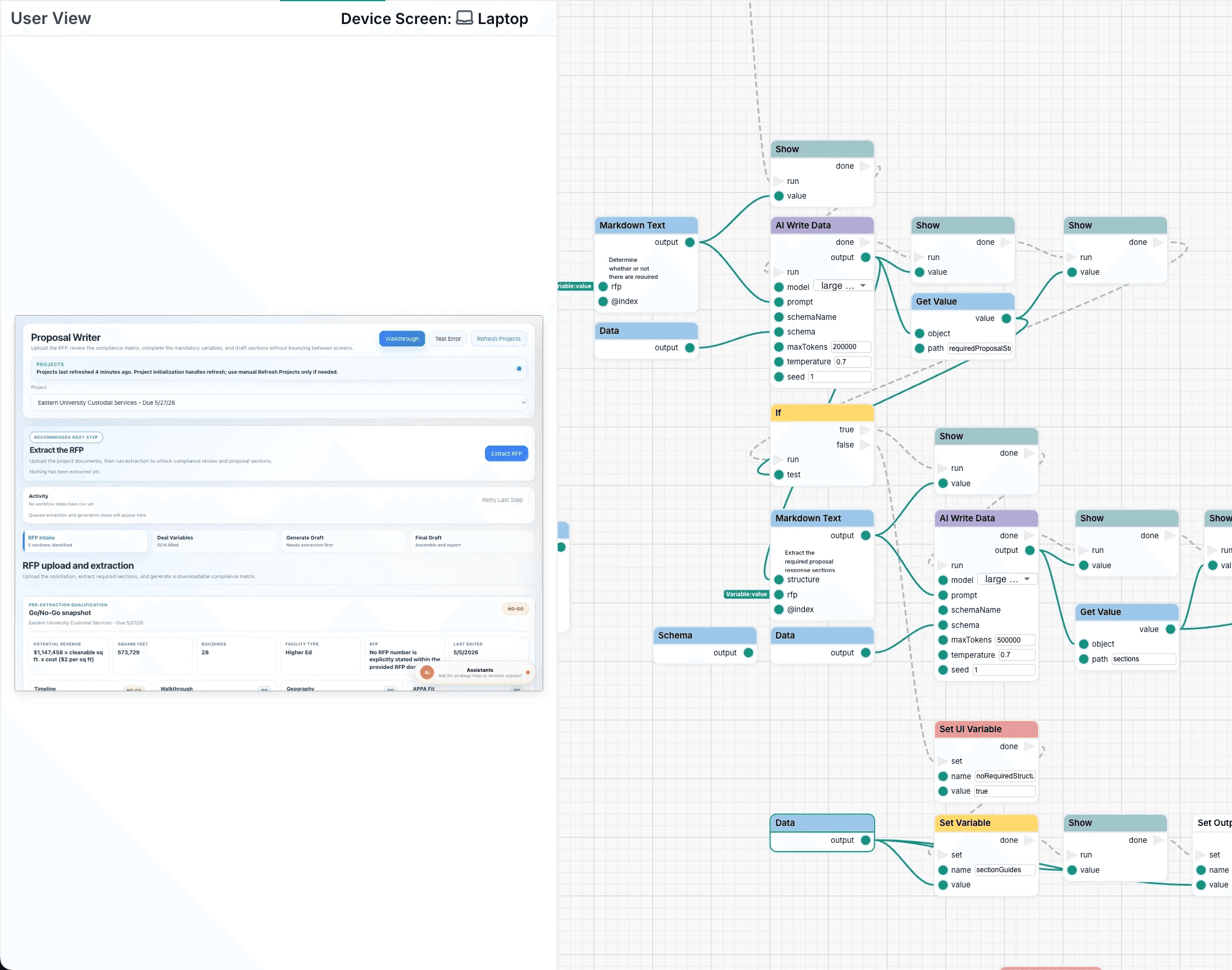
Start with the knowledge engine. Expand into the operating system around it.
Use approved knowledge to trigger real work.
The knowledge base becomes the foundation for operations. Approved records can power email assistants, support bots, briefing builders, sales enablement, internal QA, customer intelligence, and workflow actions.
Connect approved knowledge to workflow nodes, action outputs, notifications, reports, and system updates.
Automate adjacent tasks without rebuilding the same knowledge context in every application.
Keep the source of truth governed while still making it useful in daily work.
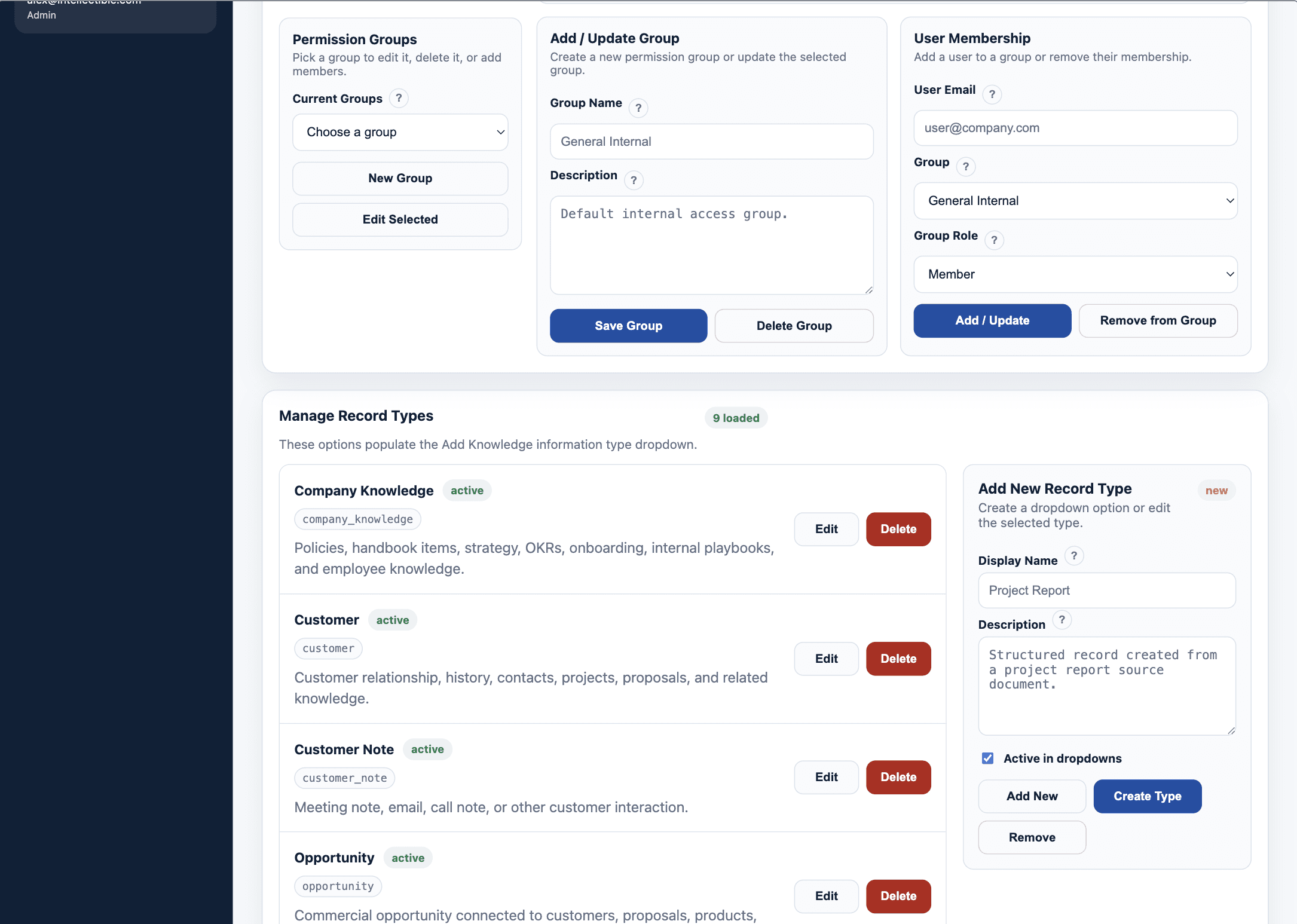
Define the knowledge model your business actually uses.
Administrators can configure the engine around the organization’s real categories, access model, and review process. The default engine works immediately, but the system does not end where the default workflow ends.
Custom record types, fields, metadata, and approval flows.
Permission groups, roles, team-level access, and governed search surfaces.
Expansion into executive dashboards, role-specific applications, automations, and integrations.